
 Nederlands
 English
 Français
Hearing protection
Working in nature and at home
Good hearing protection protects your ears in a noisy work environment and when working from home. We explain what to look for when choosing and using hearing protection.

Why hearing protection is important at work
Whether it isleaf blowers chainsawsOrhedge trimmerWorking with machinery can be noisy. Our ears are sensitive and should not be exposed to excessive noise. But if you work in a garden or forest you cannot always avoid noise.
To protect your hearing from excessive and prolonged noise and to prevent hearing damage wear hearing protection when working in a noisy environment. Think for example of the garden or on a construction site but also of industrial companies and workshops.
But not all sound is the same. In addition to volume the distance to the source is also important. For example whether a motor is directly next to the ear during use (such as a hedge trimmer) or more than a meter away (such as a hedge trimmer).lawn mowersIt is therefore important to know what noise level the ear is directly exposed to when choosing the right hearing protection.
The user manual of our garden and tool contains two values: the sound power level indicates the direct volume that the device produces while the sound pressure level indicates the value that the user actually reaches. Both values are expressed in decibels (dB).
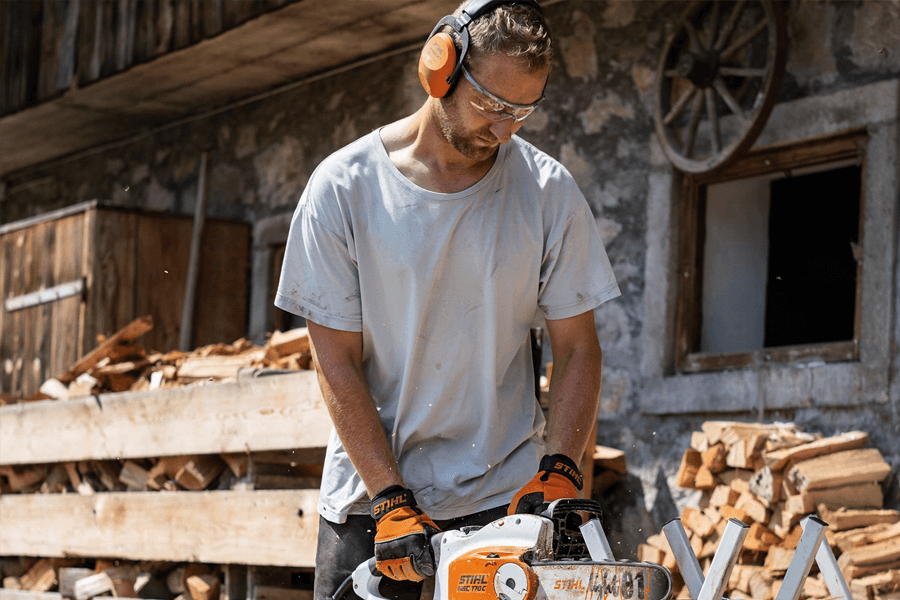
What types of hearing protection are there?
There are two main types: earplugs and hearing protectors. The important thing is that both offer the same protection; there is no fundamental difference in noise protection. These two types of hearing protection are now available in different models for different applications. They can also be combined with each other.personal protective equipment (PPE)) such as helmets or visors.
The final choice – earplugs or hearing protection – is entirely up to you. In general it is best to choose hearing protection that you feel comfortable with.
Earplugs as hearing protection
Earplugs are often used in factories and production facilities where they have to be worn for long periods of time. The advantage of hearing protection with earplugs is that many people feel more comfortable in these environments because their ears do not sweat and the hearing protection does not have to be removed and replaced multiple times.
EarplugsThey are usually made of conical PU foam and fit easily into the ear canal. Thanks to their deep fit they offer good acoustic protection. Because they are not worn on the outside of the head earplugs are generally more comfortable for spectacle wearers than hearing protection.
Special models include earplugs with connecting bands or straps or earplugs that are individually adapted to the wearer's ear canal.
Hearing protection
This hearing protection looks like a thick pair of headphones. The earplugs are usually attached to a headband or mounted on a helmet. The principle of hearing protection is the same as that of earplugs: they are easy to fold or remove during breaks.
Hearing protection is suitable for all types of work both indoors and outdoors. It can also be used in all weather conditions. In cold weather it also has the advantage of keeping the ears warm while working.
In general wearing hearing protection is recommended if you have to put it on and take it off often or if you work in a dirty environment. Hearing protection is more hygienic than earplugs for example if you have resin on your hands while working in the forest.
Hearing protection with Bluetooth®
Hearing protection with radio or Bluetooth® is an evolution of traditional products. Models like oursSTIHL hearing protection with Bluetooth® (BT) – Dynamic BTThis allows users to communicate with colleagues via a smartphone or a connected radio. This hearing protection variant also offers entertainment functions: listening to music via the radio or streaming can increase motivation and prevent loss of concentration during monotonous work.
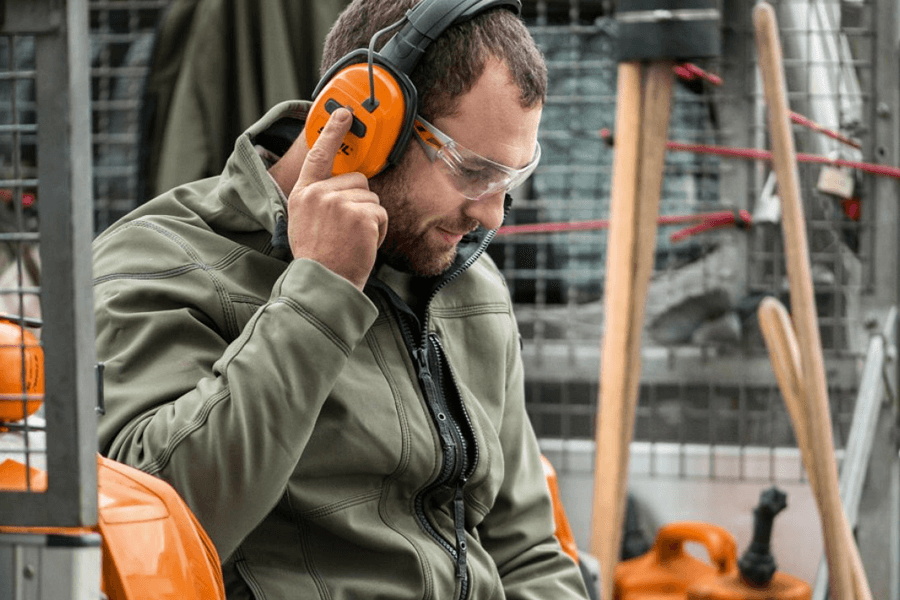
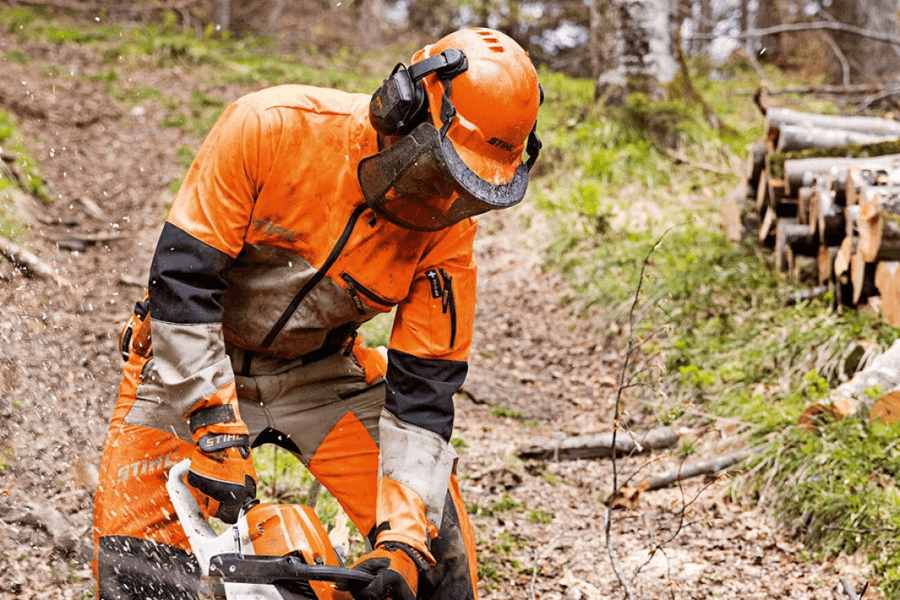
Combination of hearing protection accessories
If you are exposed to extremely high noise levels you can wear earplugs and hearing protection at the same time. This will give you better noise protection. However please note that individual protection values cannot simply be added together. Only use combinations that have been approved by recognized European test institutes.
At what volume should I wear professional hearing protection?
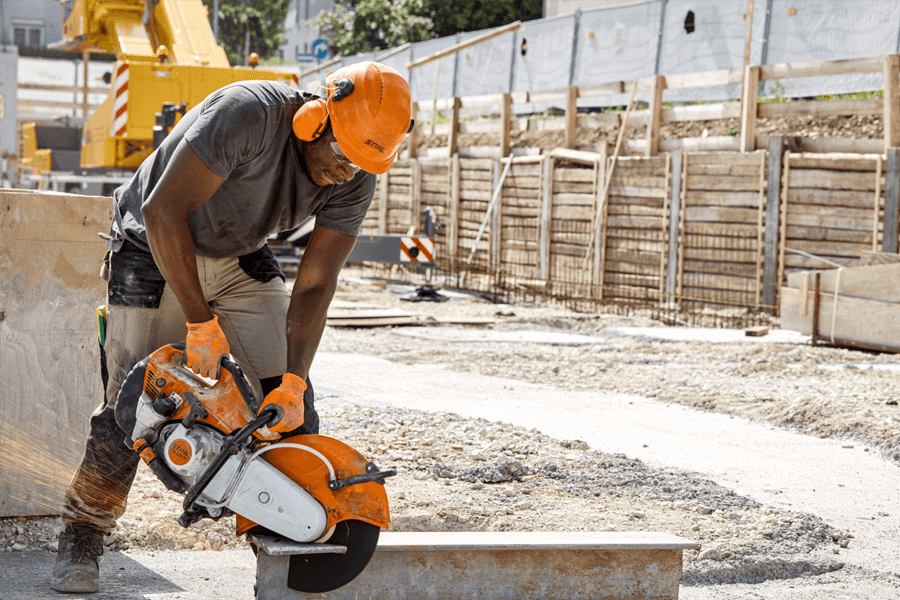
For professional activities specific regulations apply regarding noise levels for which hearing protection is required. Whether in forestry construction sites or urban areas the maximum values are determined by guidelines and regulations regarding occupational safety and noise and vibration.
- According to regulations a volume lower than 80 dB is not a problem.
- The lower exposure limit is 80 dB. Wear hearing protection if noise exceeds this limit.
- The exposure limit is 85 dB. If the noise level reaches this level wearing hearing protection is mandatory.
When should you wear hearing protection when working in private areas?
Private works such asgarden maintenanceor thesawing firewoodThere can also be noise in the forest.
A couplepetrol chainsaws petrol brushcuttersAndpetrol hedge trimmersElectric vehicles can produce noise levels of over 100 dB comparable to a rock concert. Electric models can reach levels of 85 to 100 dB about the noise level of a main road.
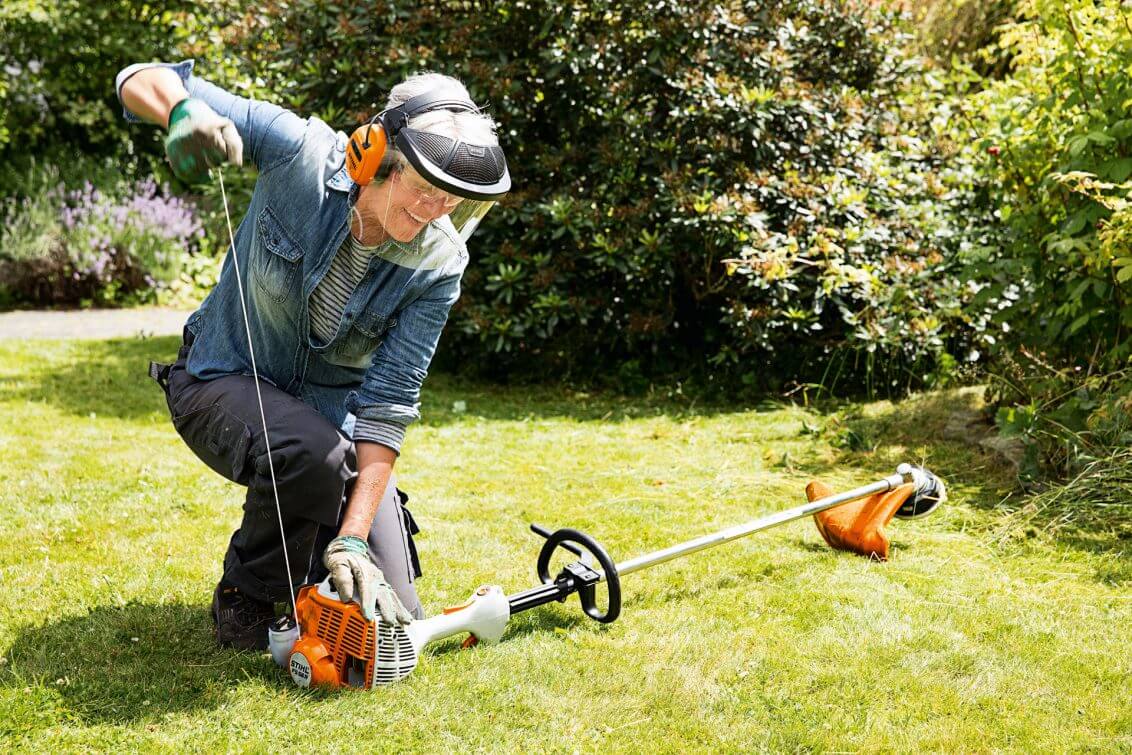
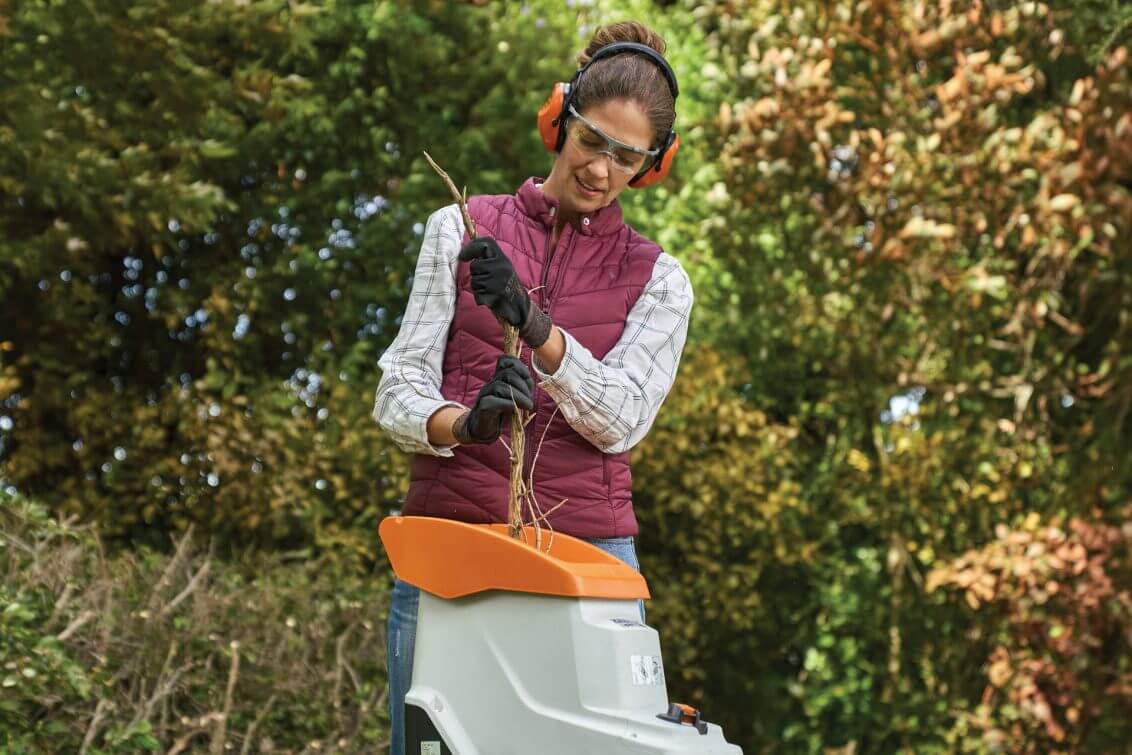
It is important to know that cordless tools produce the least noise.
Acordless leaf blowerproduces about 60 to 80 dB of sound whilebattery powered grass trimmerAndcordless hedge trimmersalso produce similar values.
It is therefore impossible to give a standard answer to the question of whether you should wear hearing protection for your private gardening or forestry work. The noise level of the tool used is decisive. The sound pressure level is stated in the operating instructions for all STIHL tools; this level determines whether you should wear hearing protection when using the tool. The values stated are for normal use and correspond to the volume actually perceived by the ear.
Advice from STIHL:Although private activities are not subject to similar regulations as those for health and safety at work this last category is a good reference. This means that wearing hearing protection from 80 dB is recommended to optimally protect your hearing.
Choosing the right hearing protection for your job
Advice from STIHL:Finding the perfect STIHL hearing protection is easy. All models with the suffix "Concept" have a headband; models with an extra "F" can fold it down. Models with "BT" in the name are Bluetooth® compatible.
How do I maintain and clean my hearing protection?
Of course to ensure that your hearing protection protects you in the long term you need to take good care of it.
- Cleaning: After work remove any accumulated dust and moisture and allow the hearing protection to dry completely.
- Maintenance: If you use hearing protection regularly the hygiene kits consisting of gaskets and foam blocks should be replaced regularly. Deformation cracks breaks or deformation of the straps are all signs that the hearing protection needs to be replaced.
- Storage: Store your hearing protection in a clean dry place that is not too warm and away from direct sunlight.
Summary: Choosing the Right Hearing Protection
- Many garden tools produce a high noise level. Therefore protect your hearing.
- For professional work such as work on a construction site or in the forest but also for work in the private sphere it is advisable to wear suitable professional hearing protection.
- Earplugs and hearing protectors offer the same level of protection. The choice of type generally depends on your preference.
- Use the SNR or HML values to determine the level of protection your hearing protection should provide. You can find this information in your device manual.