
 Nederlands
 English
 Français
Charge the batteries correctly
Charging lithium-ion batteries
Here you can read which claims about charging lithium-ion batteries are true which are long outdated and what you should pay attention to.
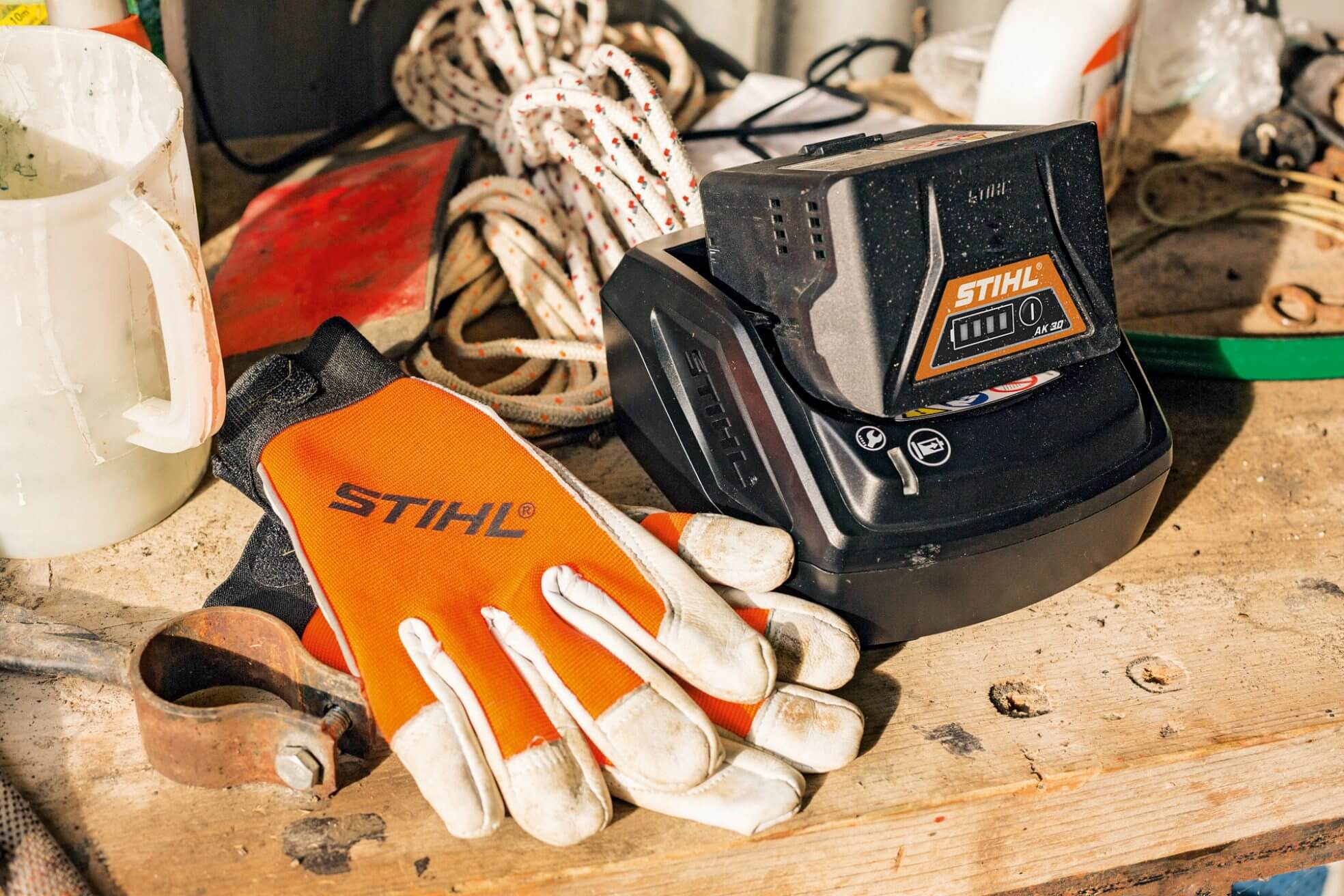
Overview: Charging Lithium-Ion Batteries
- Charge STIHL lithium-ion batteries to 80-100% before first use
- Safety technologies prevent lithium-ion batteries from overheating
- Charge overnight without worries
- Protect lithium-ion batteries from moisture heat and cold
What should you pay attention to when charging lithium-ion batteries?
The idea that batteries need to be fully charged after purchase no longer applies to modern lithium-ion batteries. However there are a few things you should keep in mind to ensure your batteries last a long time.
1. Note the optimal charging temperatures for lithium-ion batteries
You can chargeSTIHL batteriesin the range of +5 to +40 degrees Celsius without any problems. Storage is even possible at temperatures between -20 and +50 degrees although at these temperatures you run the risk of efficiency decreasing.
For more safetySTIHL loaderscan provide the following: If your battery has become too hot after prolonged use charging will only start after a certain temperature has been reached.
2. Avoid extreme temperatures with lithium-ion batteries
To protect lithium-ion batteries and to charge them properly they should not be placed on a heat source. Both too high and too low temperatures can be harmful to batteries. Therefore always respect the permitted temperature range.
It is best to charge batteries at normal room temperature or average outdoor temperature.
3. You don't need to charge lithium-ion batteries for a long time
Modern lithium-ion batteries only need to be charged to 80% before first use. Depending on the battery this takes between half an hour and four and a half hours.

Does the temperature of a battery affect the amount of energy delivered?
There is a myth that it is better to place a battery on a radiator while charging. According to this theory electrical activity would increase due to the heat input which would protect the battery during charging and extend its life. A completely empty battery could even be revived briefly by heating it because only a warm battery could use all its energy reserves. Today we know that this theory is not only wrong but also that it damages the battery.
During charging and discharging ions move practically from one electrode to the other depending on the direction of the current. If the battery gets too hot the particles accelerate and break down the material which shortens the service life. If the battery overheats highly flammable gases can be produced in the worst case. This makes the battery unusable. In general we recommend that you always adhere to the permitted temperature range of the battery.
Good to know
AllSTIHL batteriesare supplied as standard by the dealer with a charge level of 30 percent. Even if a STIHL battery is stored for a long time at the dealer it is effectively protected against self-discharge.
How dangerous is it to overcharge a battery?
It is normal for a battery to become warm during charging. This is not a cause for concern. High-quality STIHL batteries are protected against overheating and are generally safe. Once the battery is charged the charging process will stop automatically. So you don't have to worry about overcharging the battery. There is a risk in imitations and replicas. Batteries can burst due to excessive heat development.
If a battery significantly exceeds the permissible temperature a self-reinforcing exothermic chemical reaction called 'thermal runaway' occurs. The heat development in the battery then occurs autonomously and causes the core of the battery to melt.
It is a fact that the risk of battery fire remains a concern for many users. With modernSTIHL batteriesbut you're on the right side.
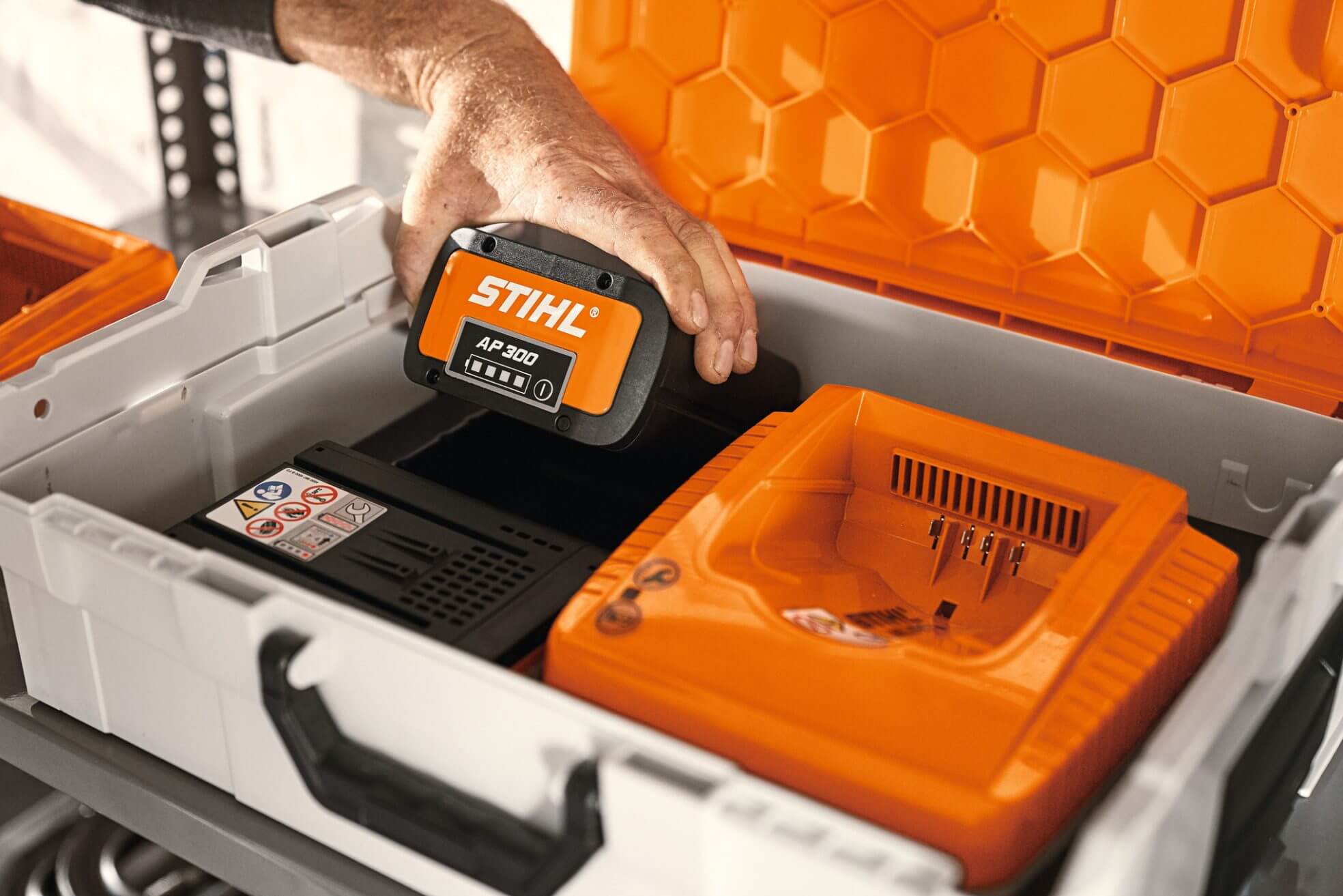
What are the advantages of STIHL lithium-ion battery products?
The high-quality battery products from STIHL offer numerous advantages such as the low fire hazard of lithium-ion batteries optimum protection against deep discharge and temperature monitoring thanks to an efficient battery management system.
Highest safety standards for STIHL lithium-ion batteries
To prevent overcharging and excessive heat generation only lithium-ion cells that meet thehighest safety requirements are used in STIHL batteries.
STIHL batteries and chargers are equipped with safety mechanisms that prevent the batteries from being overcharged and developing excessive heat.
Temperature monitoring by a battery management system
Each individual cell in a battery is monitored by a battery management system. A built-in sensor measures the temperature at the hottest point of the battery. If the temperature is too high charging is interrupted.
Low fire risk with lithium-ion batteries
With modern Li-ion batteries the risk of fire is very low. This is ensured among other things by the integrated battery management system. In this way overload and the resulting high heat development are avoided.
Optimal protection against deep discharges
Automatically put lithium-ion battery electronics to sleep when not in use for a longer period of time. This protects against damaging deep discharges.
Only a small loss of capacity
STIHL uses modern lithium-ion cells in all enginesbattery productsthat do not need to be fully charged before first use and are ready to use within a few hours. The reason: self-discharge of STIHL batteries is negligible – there is only a capacity loss of one to three percent per year.
No memory effect
There is no memory effect in lithium-ion batteries. This effect refers to the loss of capacity of nickel-cadmium (NiCd) batteries due to partial discharge. The battery ‘remembers' the energy consumption so to speak and after a while only makes the previously used capacity available instead of the original capacity.
When the battery gets hot
The electrical devices in the charger and the device battery prevent overheating and automatically switch off functions at critical points.In the unlikely event of overheating all battery cells are housed in a robust flame-retardant casing.
Lithium-ion battery storage instructions
To optimally store our lithium-ion batteries we recommend an ambient temperature of around 20 degrees. In principle you can store batteries at temperatures between -20 and +50 degrees but near these limits their functionality and lifespan may decrease. It is therefore advisable toStore lithium-ion batteries properly.
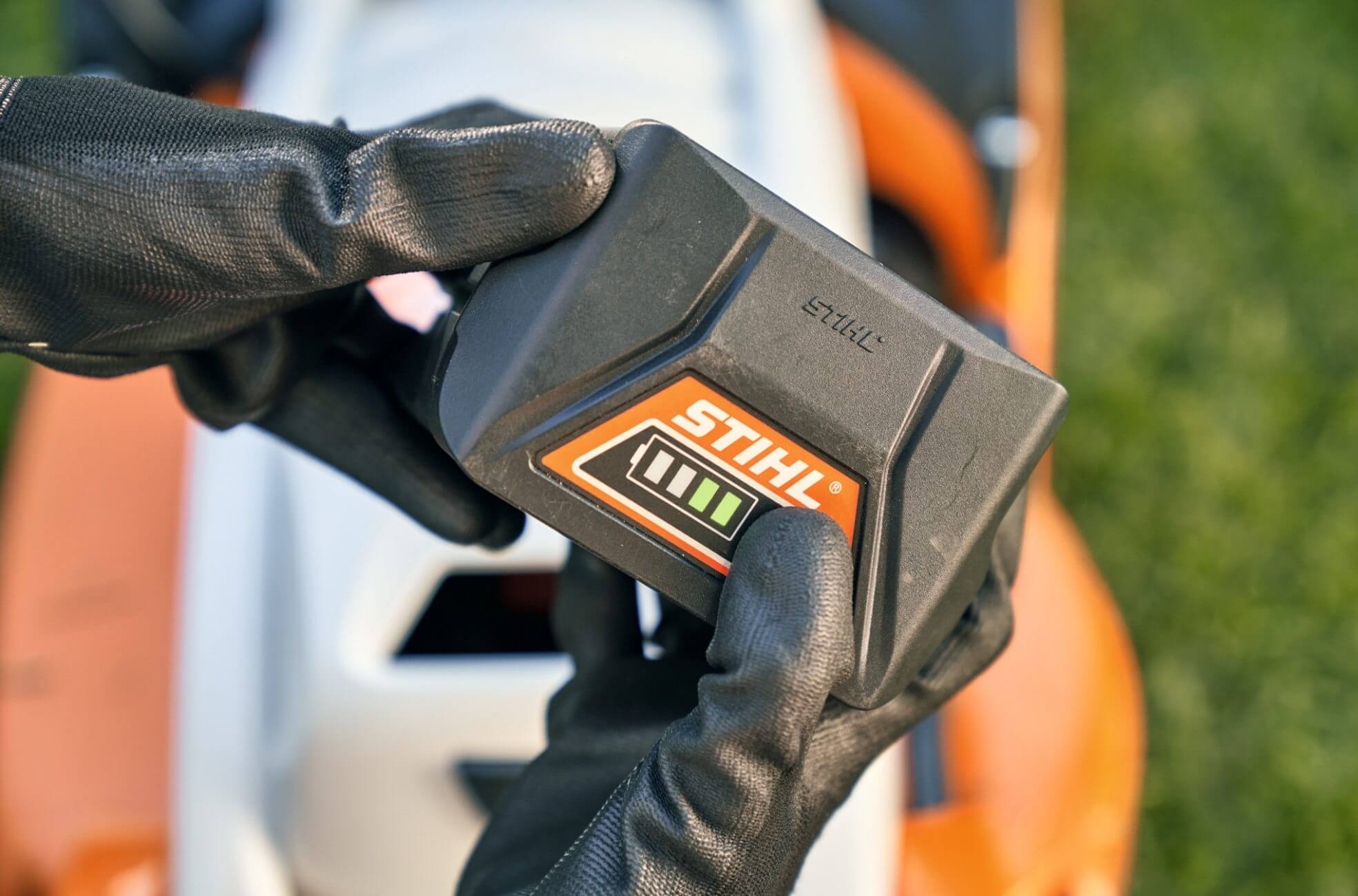
STIHL lithium-ion batteries power your lawn mower.
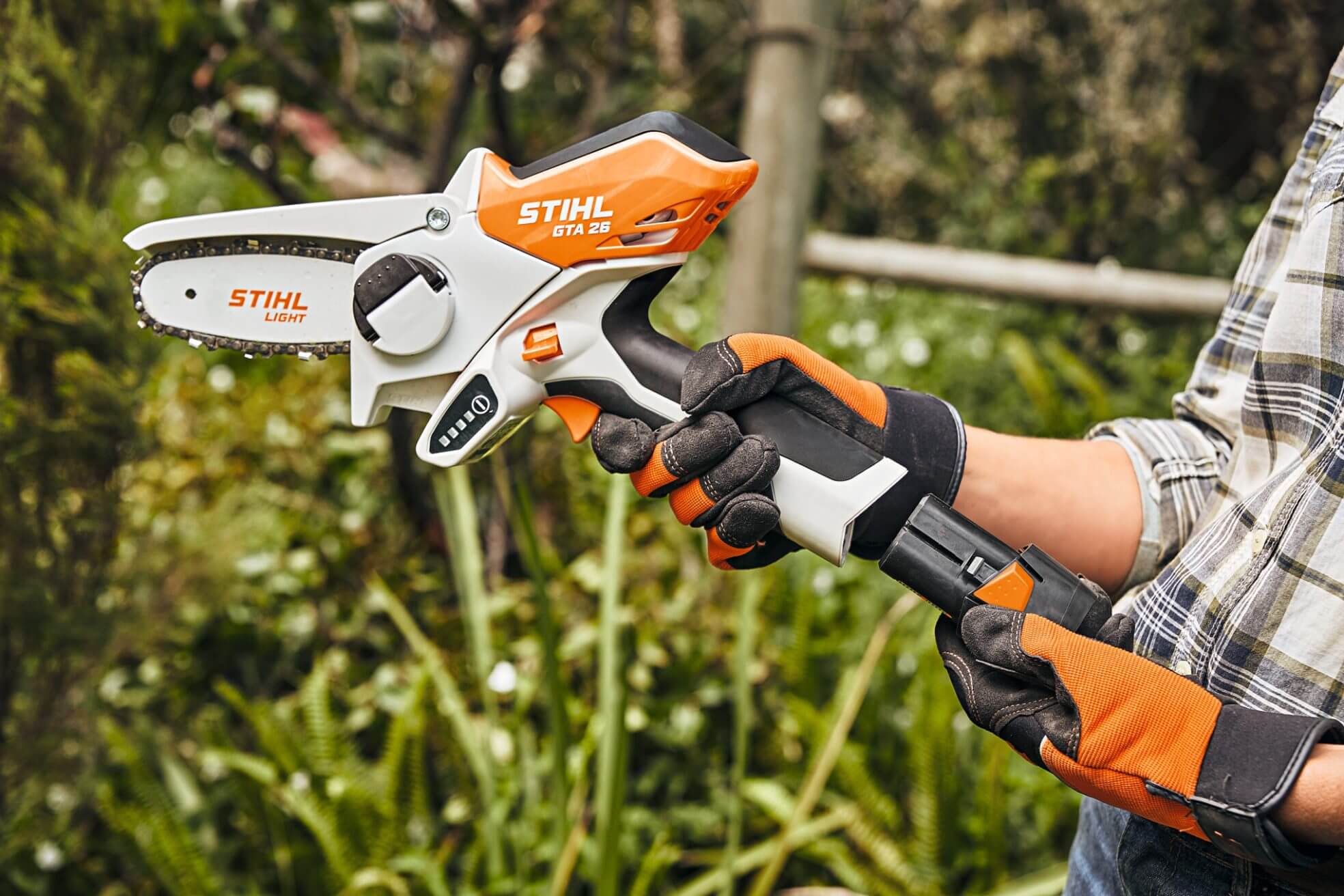
Keep your garden plants under control with the GTA 26 cordless pruning saw.
Full power with a STIHL lithium battery charger
Devices such as the AL 300 fast charger actively support the cooling of the battery with the help of an integrated air cooling system.
Charging the battery: The charge indicator on the STIHL battery
The four LED lights on the battery indicate the charging status but can also indicate malfunctions in the device or the battery. To do this simply press the button on the battery. The LED lights will light up green for about five seconds and then indicate the charging status. If only one LED flashes green this means that the battery is almost empty.
When the battery is placed in the charger the green LED lights also indicate the charging status (no light indicates charging is complete). If the LEDs are red or flashing there is a fault:
Meaning of the indicator light
 The battery needs to be charged.
 The battery is 20-40% charged.
 The battery is 40-60% charged.

The battery is 60-80% charged.
 The battery is 80-100% charged.
 The battery is too hot or too cold.
 The appliance is too hot.
 The device is not working properly.
 The battery is defective.
The battery LED indicator provides information about the charging status or faults.
Learn more about STIHL battery power
Anyone who wants to know more about how a lithium-ion battery works and how STIHL controls its operation with for example intelligent systems will find all the answers in the article aboutbasic knowledge of batteries.