
 Nederlands
 English
 Français
Proper storage of lithium-ion batteries
Proper battery maintenance is essential for a long battery life. This applies not only to the use of the battery but also to its storage.

Do I need to fully charge the battery before storing it?
In the past a battery had to be fully charged in order to be stored. This was necessary because all batteries are sensitive to high self-discharge. This resulted in a significant loss of capacity during storage of the battery or even an unusable battery and thus irreparable damage.

Lithium-ion batteries do not need to be charged before storing.
Nowadays lithium-ion batteries are the norm. Thanks to this modern technology self-discharge is negligible. Usually separate safety circuits are integrated that automatically put a deeply discharged battery into sleep mode. This protects the cells from deep discharge. Therefore it is not necessary to fully charge a battery before storing it. In fact it is even better for the battery to store it partially discharged. A very low or full charge causes unnecessary stress on the cells. We therefore recommend storing the battery with two LED lights on. This corresponds to a charge of 40% to 60%. In this way aging and self-discharge during storage are kept to a minimum.
Outdated battery technologies with high self-discharge
Older types of batteries such as nickel-cadmium (NiCd) or lead batteries used in vehicles have a high self-discharge. If they are not used for a long time they can become completely discharged.
Once the battery is fully discharged the charge level of the battery drops below the voltage at the discharge terminals. Below this limit no more energy can be supplied. The battery can then no longer be charged and the damage is irreparable. In the past it was necessary to fully charge the battery before storing it and to check the charge level regularly.
Modern battery technology that protects against deep discharge
STIHL opts for modern battery technology with lithium-ion cells. STIHL batteries have a negligible self-discharge of only one to three percent per year. In addition all STIHL batteries have an intelligent battery management system also known as BMS. The BMS monitors the voltage in each cell integrated in the battery and thus prevents deep discharge. If the voltage in the battery cells becomes too low the battery automatically goes into standby mode and can no longer be discharged. This also happens when the battery is stored. So you do not have to worry about a harmful deep discharge while storing the battery.
How do I properly store devices with built-in batteries?
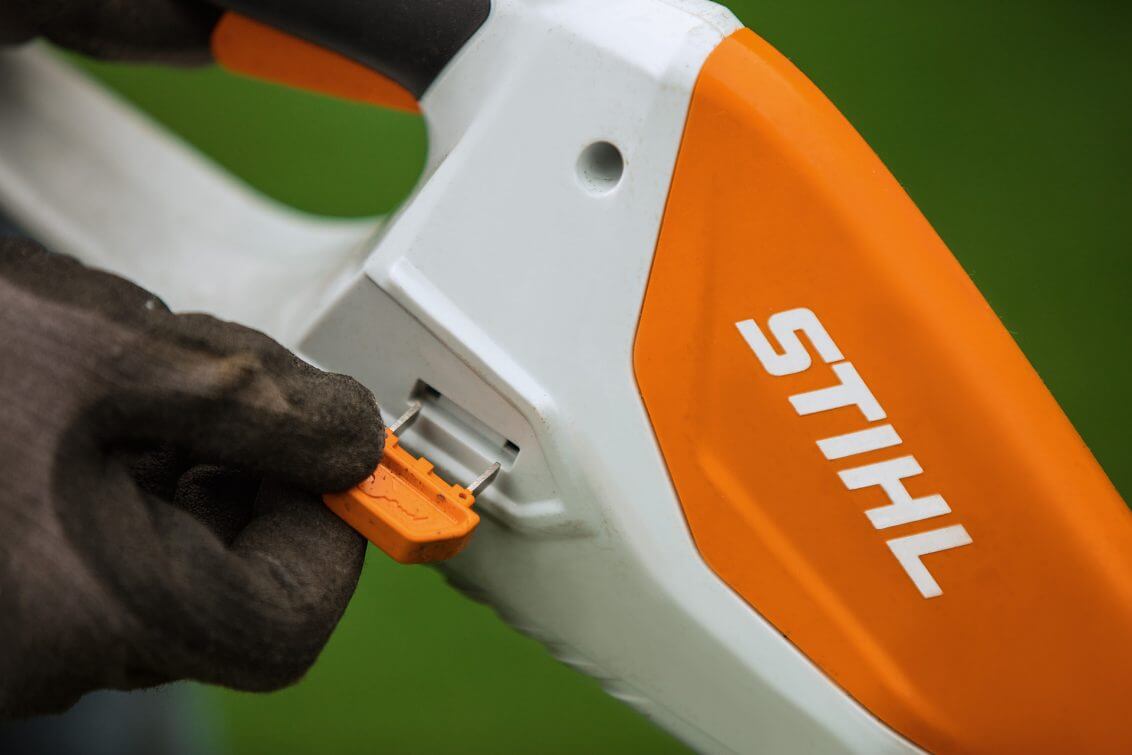
For example in a device with a built-in batteryFSA 45 cordless grass trimmerYou cannot remove the battery from the device. The machine is therefore stored with the integrated battery. When storing these machines you should take the following into account:
- Turn off the device and remove the activation key.
- Remove dirt from the machine with a cloth before storing it.
- Store the machine in a dry and safe place.
Store the device in a cool but frost-free place. Also avoid direct sunlight and humidity. For more information about the storage temperature of your device please visituser manualIt is best to keep the activation key separate from the device with built-in battery.
When should I charge the battery?
If you are going to use your device with a battery again after a long period of storage charge the battery just before use. This will maintain the capacity and have a positive effect on the lifespan. The battery can only be charged at temperatures above 5°C. The charger monitors the temperature of the battery and prevents the battery from being charged at too low or too high a temperature.
Checklist: How to Properly Store Your Battery
STIHL uses modern lithium-ion batteries for all cordless machines. The batteries are not only light and quiet they also have a high energy and power density. But even a low-maintenance battery with a long service life needs maintenance.
Protect lithium-ion batteries from the elements
- Remove the battery from the device. Check the charge level of the battery before storing it: are two LED lights on? If necessary remove dirt from the battery with a cloth.
- To protect the battery from moisture and sunlight you can store it in a closed cardboard box for example.
- The most important thing is the temperature: for the battery a temperature between -10 and +50 degrees Celsius is optimal. Think of a dry garage basement or a well-insulated shed.
- Store the battery in a safe place out of reach of children.
- Store the charger separately from the battery and at temperatures between +5 and +40 degrees Celsius.
- For more information about the storage temperature of your device please visituser manual
Battery development at STIHL
STIL has been active in battery development for over ten years. Today technology has developed rapidly and battery-powered devices are more popular than ever. This has created new fields of work for experts such as electrical engineers software developers and IT specialists at STIHL.
The optimal charge state for storing a battery
We recommend that you do not store the batteries fully charged but with two green LEDs lit. With this charge level the battery can be charged for two years without any problems. The aging and self-discharge of the battery are minimal. Only charge the battery immediately before the next use. The temperature during charging must be above +5°C.
What should I pay attention to when storing a lithium-ion battery?
The battery does not need to be charged before storing. A charge status of two lit LEDs is sufficient. In addition store the battery in a dry place at a cool temperature but above freezing. It is not recommended to store the battery outdoors and without protection from the weather.
Summary:
- Protect lithium-ion batteries from external influences during storage.
- For storage lithium-ion batteries must be equipped with two illuminated LED indicators.
- Even with long-term storage lithium-ion batteries exhibit minimal self-discharge.
- When storing lithium-ion batteries ensure a moderate temperature: -10 to +50 degrees Celsius are harmless to the batteries. The exact storage temperatures of your battery can be found in theuser manual.