
 Nederlands
 English
 Français
Cleaning garden tiles
Helpful tips for clean paths
Easily remove everyday dirt. We show you how to effectively clean paths and driveways around your home.

Cleaning garden paving: high-pressure cleaner
Pressure washers are an effective way to remove dirt and weeds from your pavements. The high water pressure dissolves even the most stubborn dirt and cleans stone by stone quickly and thoroughly. A pressure washer is particularly effective on large surfaces: the work is done quickly and gently.
Some general tips for working with a pressure washer:
- Not all garden tiles can be cleaned with a high-pressure cleaner. Concrete and hard stone tiles can be cleaned with low water pressure for example with a surface cleaner. First clean an inconspicuous area to test how the stones react and whether they are suitable for cleaning with a high-pressure cleaner.
- THEsurface cleanerworks exceptionally smoothly and splash-free keeping the area clean while you work. When using the flat jet nozzle ensure there is sufficient distance between the nozzle and the tiles.
- Do not use in rain or wet conditions.

Step 1: Remove large dirt
Clean the area to be cleaned. Sweep away dirt and leaves before using a pressure washer. If you have aleaf blower or vacuum cleanerthen you can get the job done in no time.
Step 2: Cleaning the joints of the patio tiles
Remove moss and weeds from the joints because roots can permanently damage the tiles. The use of pesticides on tiles is prohibited by law because environmentally harmful chemicals can penetrate the soil and groundwater and contaminate it.
For joints with gravel or sand it is best to use a joint scraper or a wire brush. For open joints you can also use a high-pressure cleaner. After cleaning simply refill the rinsed material. Closed joints can easily be cleaned with a high-pressure cleaner.
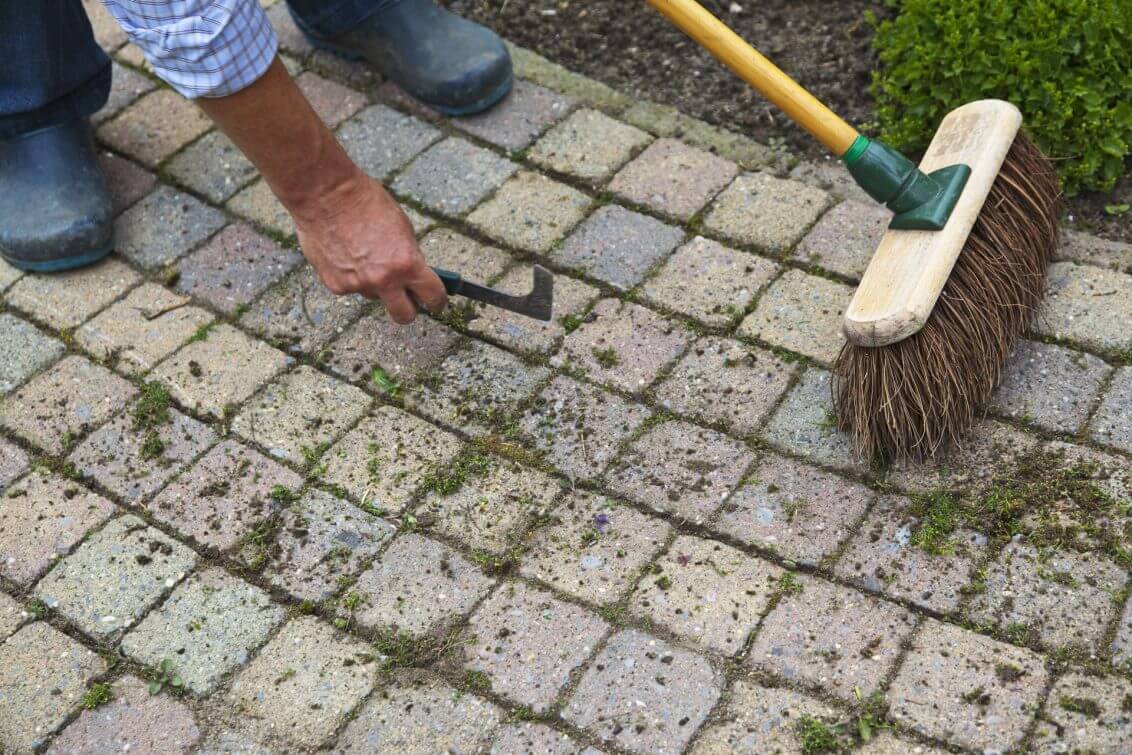
Removing weeds with a pressure washer
Removing moss and weeds from joints can be tedious and time-consuming. Using a pressure washer makes cleaning easier: organic material can be cleaned using only water pressure saving water and eliminating the need to add cleaning agents. This will help you and the environment.
Using a high-pressure cleaner for weed control provides long-lasting results. The water jet penetrates between the individual stones and takes not only the plants but also the seeds. This slows down the growth of weeds.
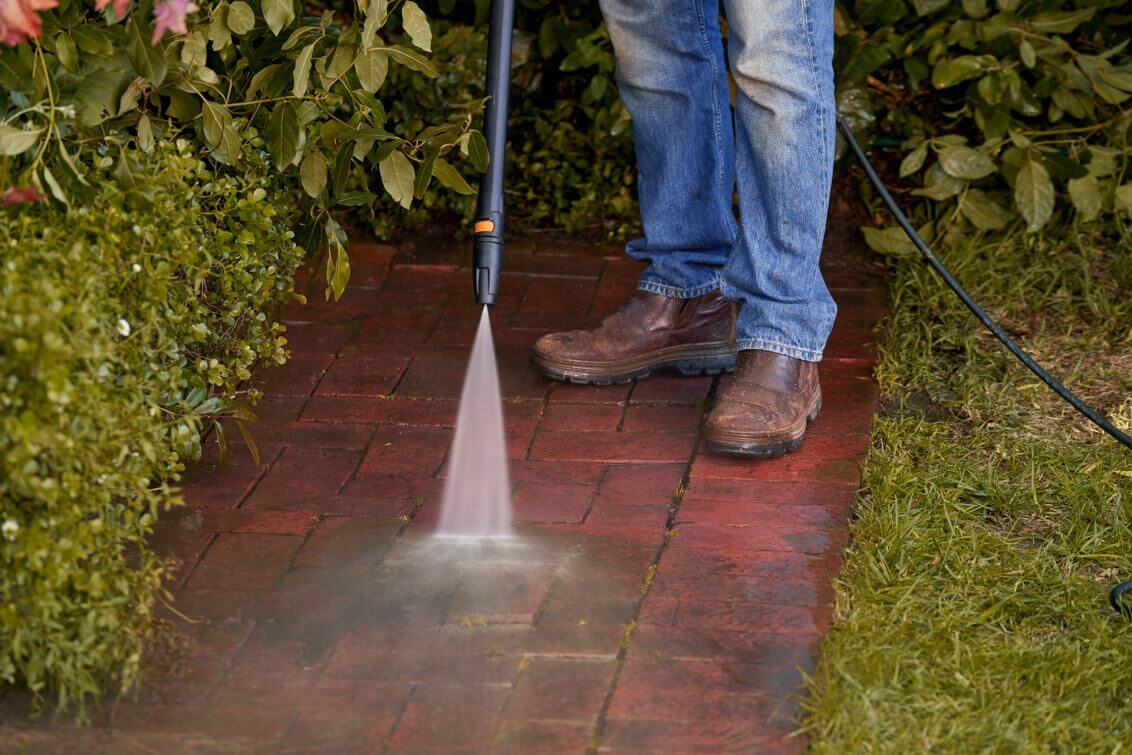
Step 3: Cleaning the garden tiles
Now that you have removed the coarse dirt and weeds it is time to clean the tiles.
For particularly heavy soiling use the cleaning agent directly with the high-pressure cleaner and let it take effect. The STIHL CS 100 stone and facade cleaner reliably removes stubborn green deposits caused by soot and dust emissions. The cleaner is biodegradable and compatible with all STIHL high-pressure cleaners.
Step 4: Filling the joints
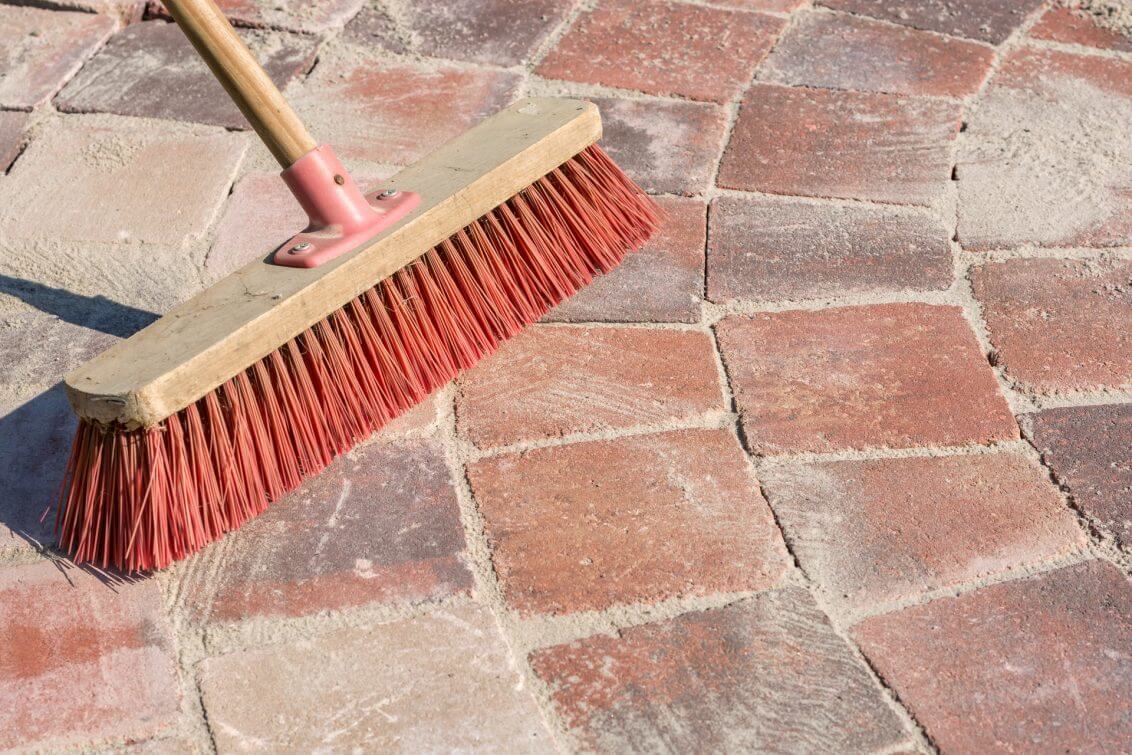
If too much material has been removed from the joints during cleaning you will need to refill them. This is important to prevent the tiles from sliding and holes from forming.
Cleaning paved paths: legal obligations
The water used to clean tiles can be contaminated with chemicals acids and other contaminants. These may not end up in the sewer or groundwater. To prevent this the discharge of wastewater is regulated by law. These rules can differ per location and fines can be imposed for violations. Therefore first consult the regulations of your municipality before cleaning garden tiles.
Cleaning patio tiles: household products
If you don't have a stone cleaner at hand you can also use simple home remedies. For cleaning small surfaces warm water a soft brush and a neutral soap solution are sufficient. It has also been proven that washing salt tackles dirt without any problems. Never add homemade cleaning agents to your pressure washer. The pressure washer may only be filled with a suitable cleaning agent.
Clean garden tiles with soda
A mixture of soda and water is an effective but very alkaline cleaner. It can be used for particularly dirty concrete blocks. Always wear safety glasses when working with this mixture as the soda crystals can irritate the eyes. Also make sure to wear work gloves.
- The amount of mixture you need depends on the surface to be cleaned. In general use 10 grams of soda crystals per liter of water. Spread the mixture over the tiles with a broom and let it sit for about 5 to 6 hours. Rinse the solution away with clean water from a pressure washer or garden hose. Make sure to comply with local regulations for waste water.
Not recommended: cleaning tiles with vinegar
Vinegar is a popular household cleaner for cleaning various surfaces. However it is not suitable for cleaning stone for the following reasons:
- Acetic acid attacks the joints between tiles and can therefore unbalance the surface beneath the tiles.
- Vinegar quickly causes stains and should not come into contact with limescale. This means that you should not use vinegar to clean concrete tiles or natural stone.
- Acetic acid irritates the respiratory tract and mucous membranes and can cause chemical burns if misused or splashed.


Cleaning concrete garden tiles: special properties of concrete
How to clean concrete garden tiles depends on the condition they are in. Before you start cleaning you should check what material the tiles are made of.
A distinction is usually made between concrete and natural stone.
Cleaning concrete garden tiles
Concrete roof tiles are the most commonly used type of stone and are available in different shapes. They can be cleaned with a surface cleaner. To check the compatibility of the stone surface start with a low water pressure and increase it if necessary.
Concrete can be cleaned with neutral and alkaline cleaning agents. However it consists of acid-sensitive limestone and can be damaged if cleaned with very acidic agents.
Removing limescale
White spots on concrete blocks are very natural but some people find them ugly. They are characteristic of freshly laid stones and consist of excess lime that comes out of the concrete after it has been exposed to rain and moisture. You can remove these spots very easily and environmentally friendly with a broom water and possibly a neutral detergent.
Cleaning natural stone
Natural stone tiles such as granite marble sandstone or basalt are elegant and of a particularly high quality. To maintain the beautiful appearance of natural stone only pH-neutral cleaning agents may be used. Acids and surfactants can damage the natural material.
Hard tiles such as granite basalt and quartzite are best cleaned with a high-pressure cleaner. These materials are robust and resistant to high water pressure. Paved paths can also be cleaned with a high-pressure cleaner.
With softer materials you should proceed with care: preferably use lukewarm water a soft brush and a neutral detergent.
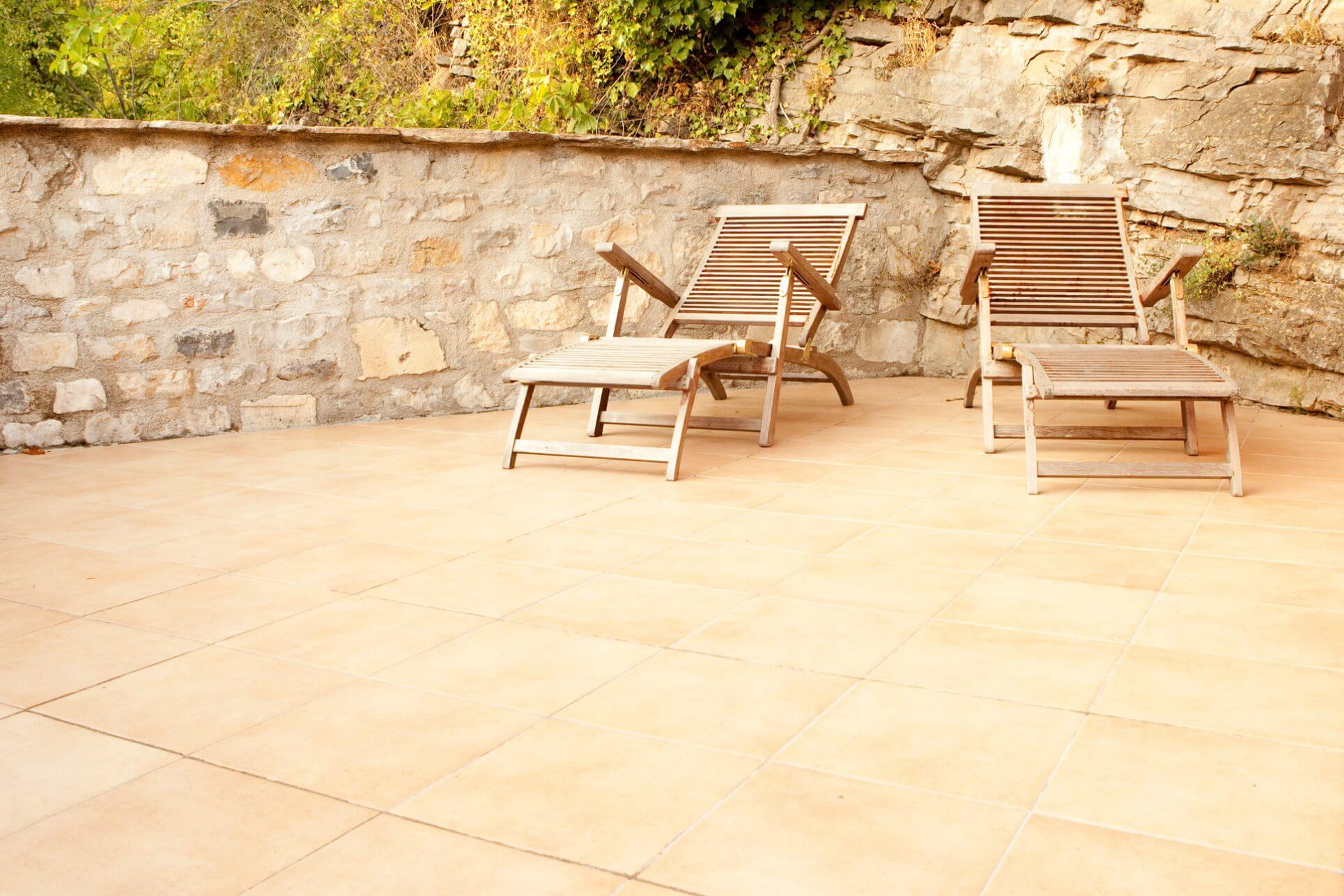
Summary: Cleaning garden tiles
- High pressure cleanersare the most effective way to remove dirt and weeds from your sidewalks.
- Start with a low water pressure and test whether the stones are suitable for high-pressure cleaning by first cleaning them in an inconspicuous area.
- Concrete and bluestone tiles such as granite basalt and quartzite can be cleaned witha surface cleanerSoft and porous natural stone types can be gently cleaned with warm water a soft brush and a pH-neutral cleaning agent.
- Concrete and natural stone are sensitive to acids and should not be cleaned with vinegar.
- To protect the environment use only biodegradable products such as:STIHL CS 100 stone and facade cleaner.
- White spots on tiles are natural lime deposits that occur mainly on new stones. They disappear by themselves after one to two years. You can speed up this process by regularly washing the stones with water a broom and if necessary a neutral detergent.
- Closed joints can be easily cleaned with a high-pressure cleaner. For joints filled with gravel or sand a joint scraper or a wire brush are suitable but you can also use a high-pressure cleaner. After cleaning simply refill the rinsed material.
- When using cleaning or maintenance products local waste water regulations must be observed.
- If you don't have a stone cleaner you can use a neutral soap solution or for concrete a mixture of soda crystals and water. Make sure yousafety glassesbecause soda splashes can irritate the eyes.